Disclaimer For educational purposes only. Do not use as medical advice
AboutBotanyChinese MedicineCaution
| Health Issues |
| For: Alternating fevers and chills • Cold and flu • Liver Disease • Irregular periods • Organ prolapse |
|
Attributes: Antibiotic • Antipyretic • Anti-inflammatory • Antibaterial • Antiviral • Analgesic • Hepatoprotective • Immunemodulatory • Chemoprotective • Anti-tumor • Cholagogic • Sedative • Immunostimulate
|
| Research |
| Articles:
|
| Constituents:
Saikosaponins |
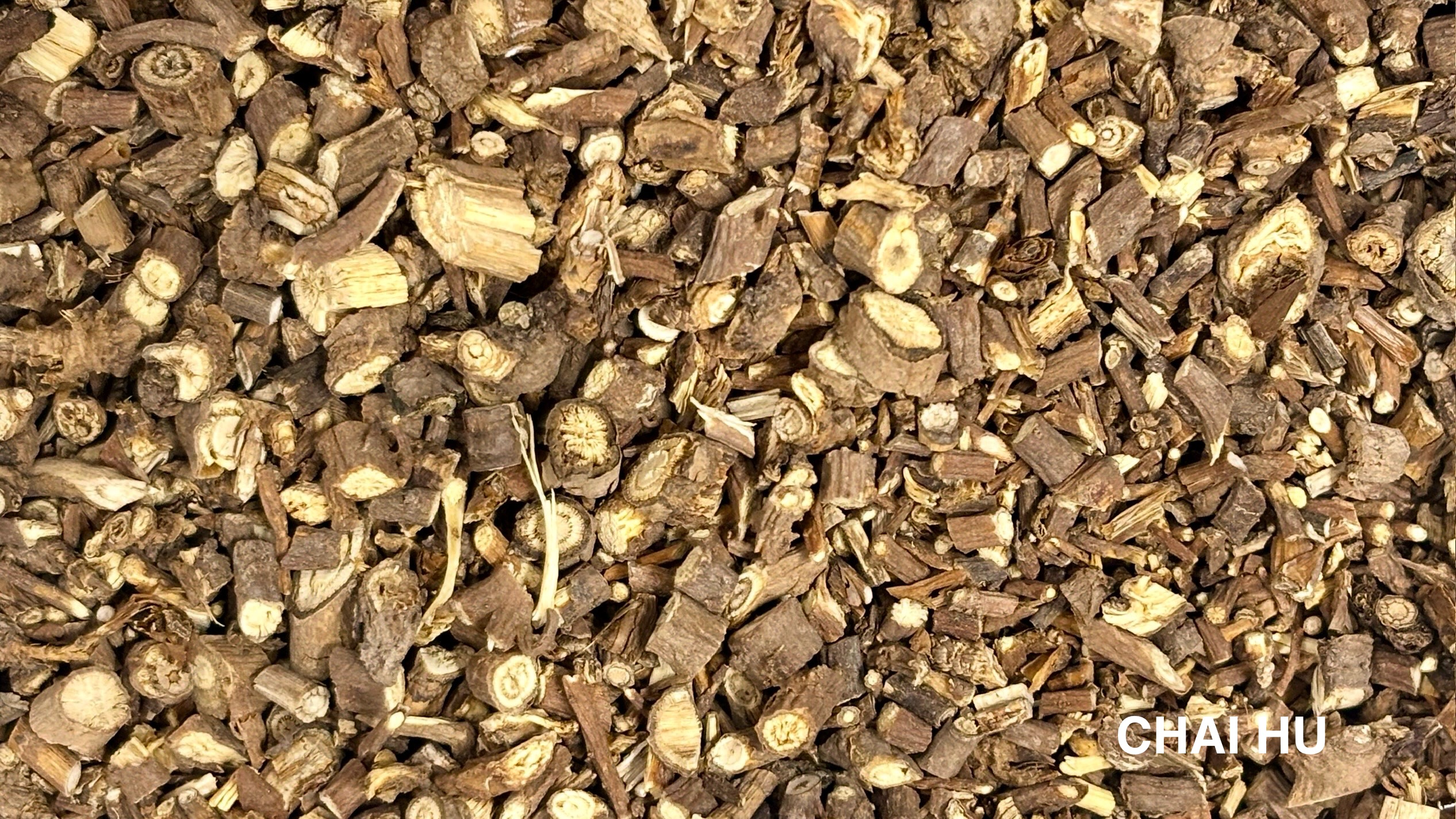
| Photos (Click to enlarge) |
|
|
| Fun Facts |
Other Names: Radix Bupleuri • Thorowax Root • Bupleurum Scorzonerifolium • Bupleurum falcatumm • Bupleurum falcatum • Hare's ear root • Saiko • Siho
Plant Family: Apiaceae |
| Bupleurum is an herb commonly used in Japanese and Chinese medicine for common cold, alternating fever and chills, chronic liver disease, digestive disorders, and malaria. Saikosaponins is the primary constituent influencing purported benefits. |
| Species |
|
Bupleurum chinensis (Bei Chai Hu) - Popularly used for jaundice. Good for liver diseases and gastric ulcers.
Bupleurum Scorzoneraefolium (Nan Chai Hu)
Bupleurum falcatum
|
| Bupleurum chinense is NOT in the USDA database. |
|
USA: Bupleurum chinense is not found in the wild.
USDA Zones: 3-7
World:
Habitats:
|
| Category: Release Exterior Wind Heat |
| English: Thorowax Pinyin: Chai Hu Pharmaceutical: Radix Bupleuri |
| Organs: Gallbladder • Liver • Pericardium • San Jiao Temperature: Cool |
| Taste: Bitter • Pungent Toxicity: |
| Patterns: Deficiency heat • Eye and ear disease • Shao Yang Syndrome (Alternating fevers and chills) • Liver Qi stagnation • Spleen Qi sinking • Organ prolapse |
Actions: Harmonize interior and exterior • Reduce fevers • Reduce chills • Soothe liver Qi • Clear muscle layer heat • Tonify stomach Qi • Guide herbs to Shao Yang Jing
Key 2nd Actions: Guide - PC, LV, GB, UJ, MJ, LJ • Raise Yang Qi • Soothe Liver Qi • Relieve Shao Yang Headache • Treat Hepatitis |
| Indications: Fever • Chills • Sore throat • Wind heat • Cold/Flu |
| Contraindications: Dries Yin and can exacerbate the Yin deficiency • Do not use as intramuscular injections • Liver fire • Hyperactive liver yang • Cytochrome P450, 2C9, 2E1, 2D6, and 3A4 • Greater than 19g may lead to liver injury |
| Typical Dosage: 3g - 9g Guidelines |
| Parts Used: Roots Substitutes: |
| Notes: |
| Dui Yao |
| ■ CHAI HU/ BAI SHAO: LV Qi stagnation causing disharmony between the Qi and blood. Vertigo, unclear vision, menstrual irregularities, dysmenorrhea, breast distention, PMS. Disharmony between LV and SP. Xiao Yao San, Si Ni Tang.[35] ■ CHAI HU/ HUANG QIN - guide to Shao Yang channel, temporal or migraine headache, ear disorders, alternating chills and fever.[15] • Alternating fever and chills, bitter taste, dry throat, dizziness, nausea due to Shao Yang syndrome. Malaria due to Shao Yang syndrome. LV Qi stagnation transforming into Fire. Xiao Chai Hu Tang.[35] ■ CHAI HU/ SHENG MA: SP Qi sinking. Bu Zhong Yi Qi Tang. Sheng Xian Tang ■ CHAI HU/ XIANG FU: power house for Liver Qi Stagnation[42] |
| Formulas with Chai Hu |
| Bu Zhong Yi Qi Tang • Chai Ge Jie Ji Tang • Chai Hu Jia Long Gu Mu Li Tang • Da Chai Hu Tang • Long Dan Xie Gan Tang • Pu Ji Xiao Du Yin • Ren Shen Bai Du San • Si Ni San • Wan Dai Tang • Xiao Chai Hu Tang • Xiao Yao San • Xue Fu Zhu Yu Tang |
| Alert |
- This herb may interact with drugs related to cytochrome P450 2C9 and can induce CYP2E1, CYP2D6 and CYP3A4 enzymes. (ref)
|
| Potential Drug Interactions |
|
Herbal medicine may interact negatively with pharma drugs and other herbs. Examples below:
Herbs:
Pharma Drugs:Antibiotics • Interferon • Oflozacin • Tolbutamide • Diabetes medication • Drugs related to cytochrome P450
|



0 Comments